... Skip to content
Edit Content
VTECZ website logo – AI tools, automation, trends, and artificial intelligence insights
  • AI Trends
  • AI Tools
  • AI News
  • Daily Automation
  • How-To Guides
  • AI Tech
  • Business
  • Events
  • AI Trends
  • AI Tools
  • AI News
  • Daily Automation
  • How-To Guides
  • AI Tech
  • Business
  • Events

Useful Links

  • About Us
  • Contact Us
  • Privacy & Policy
  • Disclaimer
  • Terms & Conditions
  • Advertise
  • Write for Us
  • Cookie Policy
  • Author Bio
  • Affiliate Disclosure
  • Editorial Policy
  • Sitemap
  • About Us
  • Contact Us
  • Privacy & Policy
  • Disclaimer
  • Terms & Conditions
  • Advertise
  • Write for Us
  • Cookie Policy
  • Author Bio
  • Affiliate Disclosure
  • Editorial Policy
  • Sitemap

Follow Us

Facebook X-twitter Youtube Instagram
VTECZ website logo – AI tools, automation, trends, and artificial intelligence insights
  • AI Trends
  • AI Tools
  • AI News
  • Daily Automation
  • How-To Guides
  • AI Tech
  • Business
  • Events
Sign Up
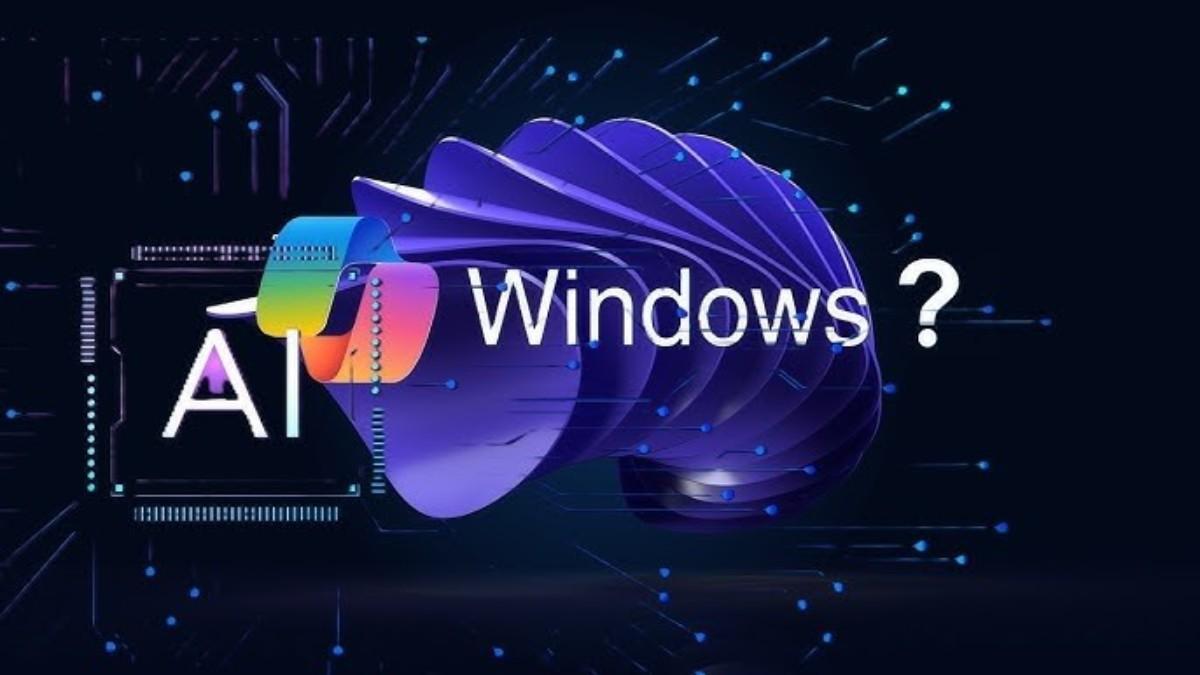
Microsoft’s Windows 2030 Vision concept showcasing AI as the core of future operating system interaction.

Microsoft’s Silent Shift to Agentic AI: Will Windows 2030 Become the World’s First Self-Running Operating System?

Ashish Singh by Ashish Singh
August 8, 2025
Share on FacebookShare on Twitter

Microsoft has released the first episode of its new “Windows 2030 Vision” video series, revealing a glimpse at how it envisions the Windows operating system evolving over the next five years. The debut installment features corporate leaders hinting at major changes to the desktop experience driven by agentic AI. Statements in the video suggest that traditional ways of navigating computers may soon feel outdated. Microsoft’s latest comments indicate that it is laying the groundwork for an operating system deeply integrated with AI as the primary orchestrator.

A Radical Shift Away From Traditional Navigation

In the video, David Weston, Corporate Vice President of Enterprise and security at Microsoft, compares the current desktop model to outdated technology. He states that “the world of mousing and keyboarding around will feel as alien as it does to Gen Z using MS-DOS.” His remark suggests that a future Windows release could replace or reduce the reliance on traditional input methods. Instead, users might interact with their devices through more natural, multimodal communication.

Weston clarified that operating systems in the future would be capable of seeing, hearing and responding the users conversationally at Microsoft. He observed that this would enable its users to demand more complicated activities without going through menus and icons. The vision indicates an interface in which voice, vision and other natural input dislodge the point and click navigation.

AI as the Core of Windows Interaction

While Weston did not outline specific implementation details, his remarks align with Microsoft’s earlier public discussions about AI integration. In 2023, Microsoft Technical Fellow Steven Bathiche presented at Build about three ways AI could be embedded into software—inside apps, beside apps, and outside apps. The “outside of apps” approach, which would allow AI to operate across the entire system, has not yet reached mainstream products.

The current reality is that AI tools function as features within individual applications or as standalone apps. The concept of an operating system designed from the ground up to act as an AI assistant remains unfulfilled. However, Weston’s comments indicate that Microsoft sees agentic AI as the future of Windows—an AI layer capable of orchestrating apps, managing workflows, and responding proactively to user needs.

Concept illustration of Microsoft Windows using AI as the primary interface for apps and workflows.

Read also: Microsoft’s Silent Shift to Agentic AI: Will Windows 2030 Become the World’s First Self-Running Operating System?

Extending AI Control Beyond Apps

This potential evolution resembles how recent AI-powered browsers manage multiple tabs and automate browsing tasks. In a Windows environment, the same principle could apply to desktop applications, files, and settings. Instead of opening programs and manually executing commands, users could ask Copilot to complete tasks for them directly.

Such a shift would reduce reliance on the mouse and keyboard for everyday operations. It would also position Windows as a proactive assistant rather than a passive platform. The OS could interpret user intent, manage resources, and execute multi-step workflows without traditional navigation.

Historical Context and Executive Support

CEO Satya Nadella has previously stated that AI “will fundamentally change what an operating system is, what a UI looks like, and how application interaction goes.” This aligns with Weston’s vision and reinforces the idea that Microsoft views agentic AI as central to the OS’s future evolution.

Sources familiar with the company’s internal efforts report that Microsoft has already developed prototype code exploring this next-generation desktop paradigm. While not publicly disclosed, this work suggests that the shift from concept to tangible experimentation is already underway inside the company.

Not an Immediate Change for Windows 12

Despite the strong vision presented in the video, the transformation is unlikely to arrive with the next consumer release. Industry observers believe a mainstream agentic OS remains years away. Microsoft’s focus appears to be on building the foundational technology and testing it in controlled environments before making it a default experience.

The recently announced Copilot Mode in Microsoft Edge may serve as one such public test bed. While marketed as a browser feature, it could also act as a proving ground for AI orchestration capabilities that may later expand into the broader Windows environment.

Microsoft Windows 12 concept image showing gradual AI integration into the operating system.

Read also: CLI GitHub Actions: Smarter, Faster Coding with Google’s Free AI Teammate

A Strategic Position for AI Integration

Due to Windows ‘ market dominance, Microsoft is uniquely positioned to integrate AI deeply into everyday computing. Competing AI tools such as OpenAI’s ChatGPT or Perplexity remain application-based, requiring users to launch them separately. By contrast, Microsoft could embed its Copilot functionality directly into the operating system, making it accessible across all tasks without leaving the desktop environment.

This level of integration could redefine how people work, learn, and manage digital content. An AI that operates “as” the OS could unify workflows, eliminate repetitive manual actions, and enable users to complete complex operations through simple conversational commands.

Vision for the Coming Years

The “Windows 2030 Vision” series appears to be designed to unveil Microsoft’s long-term plans gradually. While the first episode focused on broad themes and hinted capabilities, future installments may provide more specific examples or demonstrations. Based on the series description, additional episodes are expected in the coming weeks and months.

As long as Microsoft persists with the clues that AI can be an essential part of the operating system functionality, it is likely to be welcomed by users with gradual modifications providing them with even more agentic interactions. These might begin as add-ons to Copilot and other integrated services, and ultimately become the ability to have an OS in which AI performs most of work with users.

The Road Ahead for Agentic Windows

Multimodal AI must make the necessary progress before it will be possible to completely develop the agentic OS in relation to the present-day app-centric one. It must be capable of reliably recognizing speech, visuals, and situational information to execute the user’s purpose. This involves technical novelties and a momentous rearrangement of user habits and expectations.

Though Microsoft has not announced a date or even version of this new experience it is clear through a combination of executive statements, previous presentations and internal prototypes that there is something more theoretical about the concept. The vision of the company is to make AI a standard interface of Windows in the long-term perspective.

Futuristic concept of Microsoft Windows powered by agentic AI for seamless multimodal interaction.

Read also: How AI Agents Are Shaping the Future of Customer Service and Efficiency

What is Microsoft’s “Windows 2030 Vision” series about?

Microsoft’s “Windows 2030 Vision” is a planned video series outlining the company’s roadmap for Windows over the next five years, focusing heavily on agentic AI integration and a shift away from traditional navigation methods.

How will future versions of Windows change according to Microsoft?

Future versions of Windows may move beyond the mouse and keyboard, using multimodal AI that can see, hear, and respond to users through natural language and visual inputs.

What is agentic AI in the context of Windows?

Agentic AI refers to an AI system embedded into the OS that can orchestrate apps, manage workflows, and complete complex tasks directly based on user requests without manual navigation.

Will these AI-driven changes arrive with Windows 12?

No. While prototypes exist internally, experts believe a fully agentic OS is still years away. Windows 12 is unlikely to include this full transformation.

How is Microsoft testing this AI technology today?

Microsoft may be testing elements of this future AI-powered OS through features like Copilot Mode in Microsoft Edge, which allows AI to handle tasks and automate workflows within the browser.
Tags: AI productivity toolsMicrosoft 365Microsoft EdgeMicrosoft OneNoteVision Match
Ashish Singh

Ashish Singh

Ashish — Senior Writer & Industrial Domain Expert Ashish is a seasoned professional with over 7 years of industrial experience combined with a strong passion for writing. He specializes in creating high-quality, detailed content covering industrial technologies, process automation, and emerging tech trends. Ashish’s unique blend of industry knowledge and professional writing skills ensures that readers receive insightful and practical information backed by real-world expertise. Highlights: 7+ years of industrial domain experience Expert in technology and industrial process content Skilled in SEO-driven, professional writing Leads editorial quality and content accuracy at The Mainland Moment

Next Post
"UK and U.S. flags merged with AI circuit patterns, representing the OpenAI government partnership and its policy impact."

The Dawn of a New Era: Analyzing OpenAI's Massive US Government Partnership and its Broader AI Implications

Leave a Reply Cancel reply

Your email address will not be published. Required fields are marked *

Recommended.

Chatgpt agents

ChatGPT Agent Can Now Shop, Create Slideshows, and Browse Like a Human

July 17, 2025
"UK and U.S. flags merged with AI circuit patterns, representing the OpenAI government partnership and its policy impact."

The Dawn of a New Era: Analyzing OpenAI’s Massive US Government Partnership and its Broader AI Implications

August 8, 2025

Trending.

Visualization of VaultGemma, Google’s 1B parameter AI model built with differential privacy.

Vault Gemma: Google’s Privacy-First 1B AI Model Built for Open-Source Disruption

September 17, 2025
Boost Sales & Efficiency: AI Automation for US E-commerce Businesses

Top 10 AI Writing Assistants Compared: Which One Fits Your Needs?

July 11, 2025
Google Gemini Audio Uploads Guide: Transcribe Podcasts, Voice Memos and Meeting Recordings

Google Gemini Audio Uploads Guide: Transcribe Podcasts, Voice Memos and Meeting Recordings

September 9, 2025
Global AI Show Abu Dhabi 2025 brings together 5,000+ global leaders to explore AI regulation, smart cities, and the future of jobs

Global AI Show Abu Dhabi 2025: Inside the Middle East’s Boldest Bet on AI Regulation, Smart Cities & Future Jobs

September 9, 2025
DINOv3 model using self-supervised learning to overcome annotation scarcity in computer vision

Meta’s DINOv3 Arrives: 1M-Scale Self-Supervised Vision Model with Gram Anchoring & 4K Dense Features

August 18, 2025
VTECZ website logo – AI tools, automation, trends, and artificial intelligence insights

Welcome to Vtecz – Your Gateway to the World of Artificial Intelligence
At Vtecz, we bring you the latest updates, insights, and innovations from the ever-evolving world of Artificial Intelligence. Whether you’re a tech enthusiast, a developer, or just curious about AI.

  • AI Trends
  • AI Tools
  • AI News
  • Daily Automation
  • How-To Guides
  • AI Tech
  • Business
  • Events
  • AI Trends
  • AI Tools
  • AI News
  • Daily Automation
  • How-To Guides
  • AI Tech
  • Business
  • Events
  • About Us
  • Contact Us
  • Privacy & Policy
  • Disclaimer
  • Terms & Conditions
  • Advertise
  • Write for Us
  • Cookie Policy
  • Author Bio
  • Affiliate Disclosure
  • Editorial Policy
  • Sitemap
  • About Us
  • Contact Us
  • Privacy & Policy
  • Disclaimer
  • Terms & Conditions
  • Advertise
  • Write for Us
  • Cookie Policy
  • Author Bio
  • Affiliate Disclosure
  • Editorial Policy
  • Sitemap

Why Choose us?

  • Trending AI News
  • Breakthroughs in Machine Learning & Robotics
  • Cutting-edge AI Tools and Reviews
  • Deep Dives into Emerging AI Technologies

Stay ahead with daily blogs that simplify complex topics, analyze industry trends, and showcase how AI is shaping the future.
Vtecz is more than a blog—it’s your daily AI companion.

Copyright © 2025 VTECZ | Powered by VTECZ
VTECZ website logo – AI tools, automation, trends, and artificial intelligence insights
Icon-facebook Instagram X-twitter Icon-linkedin Threads Youtube Whatsapp
No Result
View All Result
  • AI Trends
  • AI Tools
  • AI News
  • Daily Automation
  • How-To Guides
  • AI Tech
  • Business
  • Events

© 2025 Vtecz. All rights reserved.

Newsletter

Subscribe to our weekly newsletter below and never miss the latest news an exclusive offer.

Enter your email address

Thanks, I’m not interested

Seraphinite AcceleratorOptimized by Seraphinite Accelerator
Turns on site high speed to be attractive for people and search engines.