Skip to content


AI detectors are becoming essential in journalism, education, and content production. To determine whether text is human or artificial intelligence (AI) generated, these tools examine writing patterns. This guide describes the best tools for 2025, their limitations, and how they operate.
What Are AI Detectors?
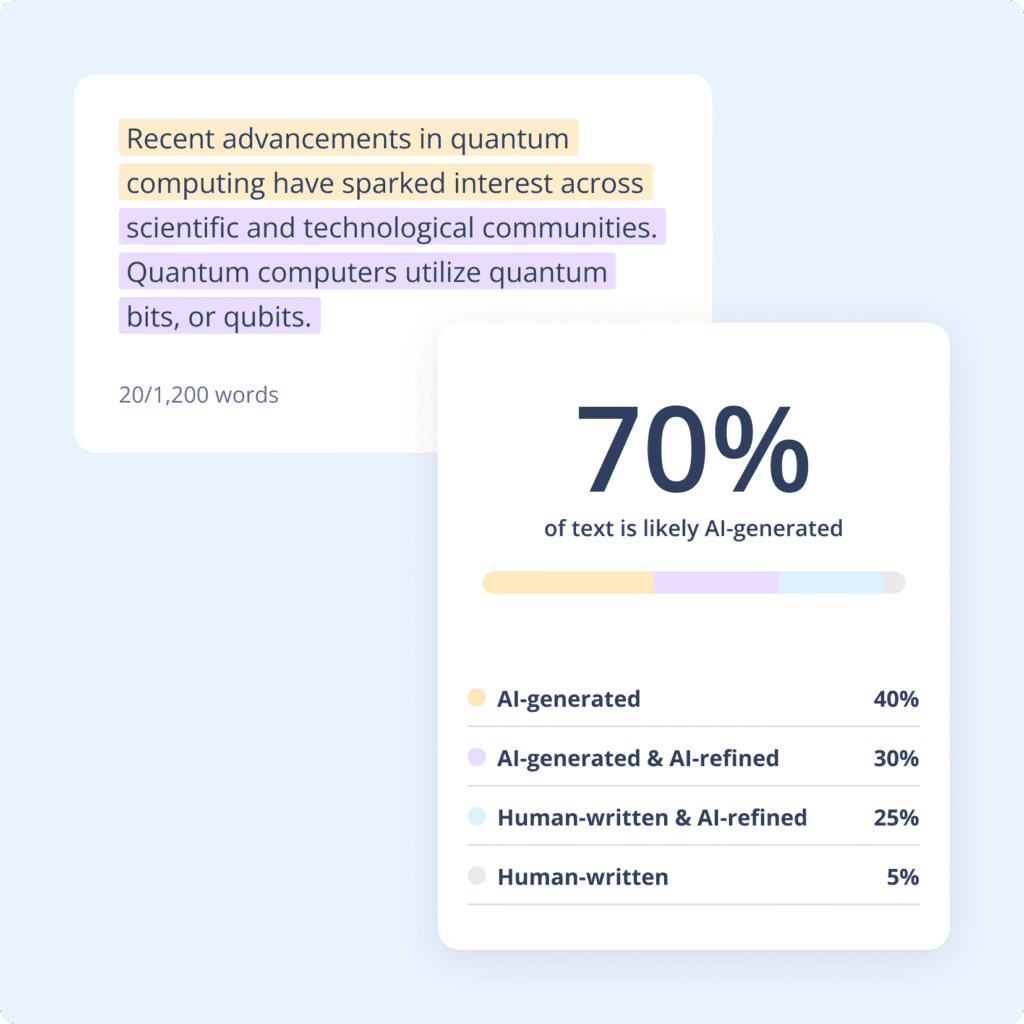
AI content detectors, also known as AI writing detectors, are computer programs that determine whether a text or other type of content was authored by a human being or an AI model, such as ChatGPT. They are very common in fields such as education, publishing, journalism, and corporate content validation.
Their primary purposes are to analyse text writings to find the patterns consistent with the text created by an AI, such as uniformity in sentences, minimal fluctuations, and predictable language. The systems are deployed to use machine learning (ML) and natural language processing (NLP) to benchmark the submitted text against massive databases of human-written samples and AI-generated samples.
Academic institutions, like. Universities utilise such detectors to ensure academic integrity by consulting on the possibility of originality of essays and dissertations. In the same measure, journal editors use such tools to check that the language used in the submissions has not been copied into the generative AI tools.
How Do AI Detectors Work?
The activity of AI detectors consists of a layered analysis within which the combination of linguistic, statistical, and machine learning methods is used. As an overview of how they usually work, this is what they typically do:
Tokenization and Preprocessing
AI Detector splits the text received as input into small pieces of data called tokens. They could be sub-word fragments or words. This enables the system to study the frequency and context effectively. The text is also normalised, that is, lowercased, de-punctuated, and any extra spaces are removed to limit variability.
Feature Analysis (Perplexity, Burstiness, etc.)
The software does feature analysis of the text after tokenization, where different aspects of the text are examined.
- Perplexity: The degree to which a word is predictable in context. Smaller perplexity implies that the text is very predictable, which is a characteristic feature of AI-written text.
- Burstiness: This evaluates sentence length differences and structure. Burstiness is characteristic of human writing because of people’s inherent variability in thought and utterance.
- N-gram Patterns: Tests a repeating sequence of words. Since large datasets are used in training AI text, a similar pattern results in repetition.
- Vocabulary Complexity: Compares the word usage and structure of sentences with any familiar pattern of human and AI writing.
Machine Learning Classification
The guts of the majority of detectors are labelled as a data-trained classifier. The system gets trained on the samples of both human and AI-created data to identify patterns and make predictions. These models include simple statistical classifiers to complex models of deeper learning.
Probability Scoring & Cross-Referencing
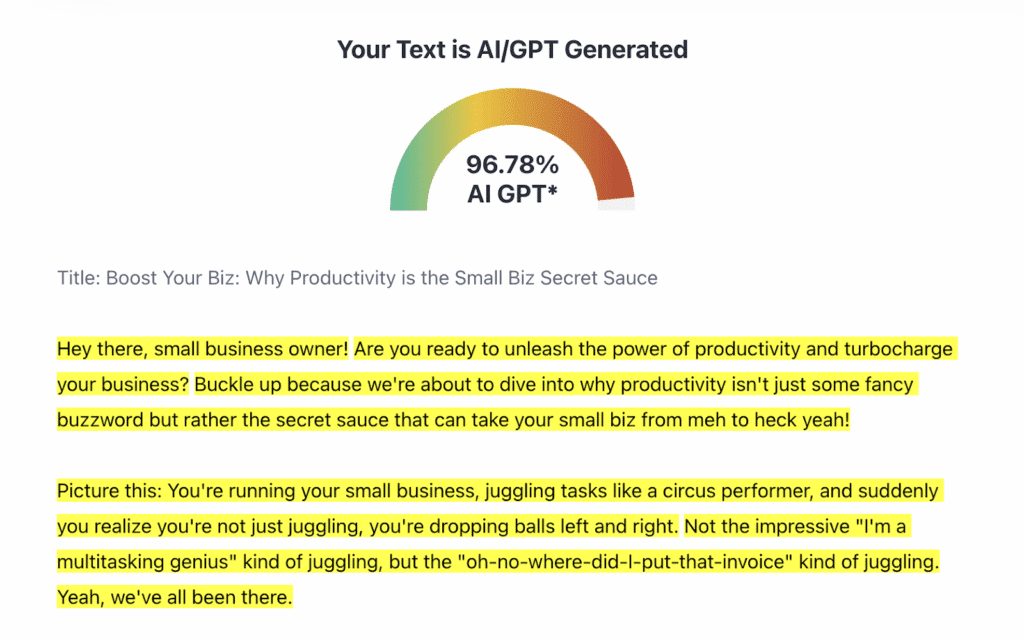
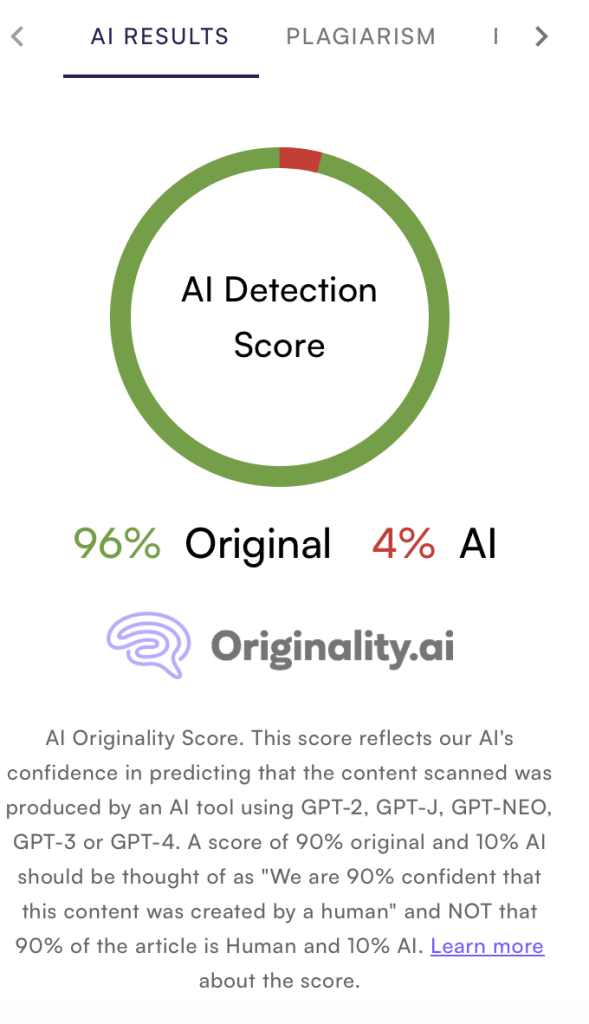
Once that is done, a score is produced to show the probability that AI would have written the material. The scores are usually in the form of percentages (e.g., score of 87% AI generation) or degrees of confidence (e.g., likely human).
Read also: How to Bypass Character AI Filters in 2025
Other tools perform comparisons of text against registries of known outputs, or more semantically sensitive checks as well. The final complete production can be marked in questionable parts or phrases as well to assist the human reviewers.
Limitations of AI detectors
While AI detection tools are increasingly advanced, they are far from perfect. Here are some key limitations:
False positives – Human-written text, especially academic or formal writing, may be misclassified as AI-generated. Non-native English speakers are often affected due to structured writing styles.
False negatives – Advanced AI models like GPT-4 can produce text that looks human, making it difficult for detectors to flag them correctly.
Model adaptation – Detectors need constant updates. If outdated, they perform poorly against newer AI systems.
Lack of context – AI detectors analyse text in isolation, ignoring intent, tone, or nuance. This can result in misclassification.
Easy bypass methods – Minor edits such as spelling errors, sentence restructuring, or synonym swaps can trick AI detectors.
AI detectors vs. plagiarism checkers
Though similar in function, AI detectors and plagiarism checkers serve different purposes:
Feature | AI detectors | Plagiarism Checkers |
Purpose | Identify AI vs. human authorship | Identify copied or unoriginal content |
Method | Use ML to detect patterns of AI writing | Use databases to match identical or paraphrased content |
Limitations | Struggle with advanced AI or subtle human edits | Cannot detect AI-generated but original phrasing |
Are AI Detectors Reliable?
The insights provided by AI detectors are useful, but they cannot be 100 per cent accurate. Studies show their accuracy to range between 70 and 90 per cent. Tools such as Originality.ai, GPTZero, and Copyleaks are considered to be more sound than others, not to mention that they can be combined
Nevertheless, even the best tools can make mistakes, or creative or non-standard writers can see mistakes. Detectors frequently discriminate against non-native writers and formal tones. Due to this, it is essential to employ AI detectors as consultative mechanisms, rather than putting their power at their disposal. Human review must be used.
Popular AI Detection Tools in 2025
- Originality.ai: Used by professionals, known for high GPT-4 detection rates.
- GPTZero: Popular in education, highlights AI-written sentences using burstiness and perplexity.
- ZeroGPT: Free tool with probability scoring; suitable for light use.
- Copyleaks AI Detector: Combines AI detection with plagiarism checking; supports multiple languages.
- Turnitin AI Writing Detection: Integrated in academic settings; sometimes criticised for false positives.
- Grammarly AI Content Detector: Useful for professionals and business users.
- Writer.com Detector: Business-oriented tool; gives clear verdicts like “likely AI” or “likely human.