... Skip to content
Edit Content
VTECZ website logo – AI tools, automation, trends, and artificial intelligence insights
  • AI Trends
  • AI Tools
  • How-To Guides
  • AI Tech
  • Business
  • Events
  • AI Trends
  • AI Tools
  • How-To Guides
  • AI Tech
  • Business
  • Events

Useful Links

  • About Us
  • Contact Us
  • Privacy & Policy
  • Disclaimer
  • Terms & Conditions
  • Advertise
  • Write for Us
  • Cookie Policy
  • Author Bio
  • Affiliate Disclosure
  • Editorial Policy
  • Sitemap
  • About Us
  • Contact Us
  • Privacy & Policy
  • Disclaimer
  • Terms & Conditions
  • Advertise
  • Write for Us
  • Cookie Policy
  • Author Bio
  • Affiliate Disclosure
  • Editorial Policy
  • Sitemap

Follow Us

Facebook X-twitter Youtube Instagram
VTECZ website logo – AI tools, automation, trends, and artificial intelligence insights
  • AI Trends
  • AI Tools
  • How-To Guides
  • AI Tech
  • Business
  • Events
Sign Up
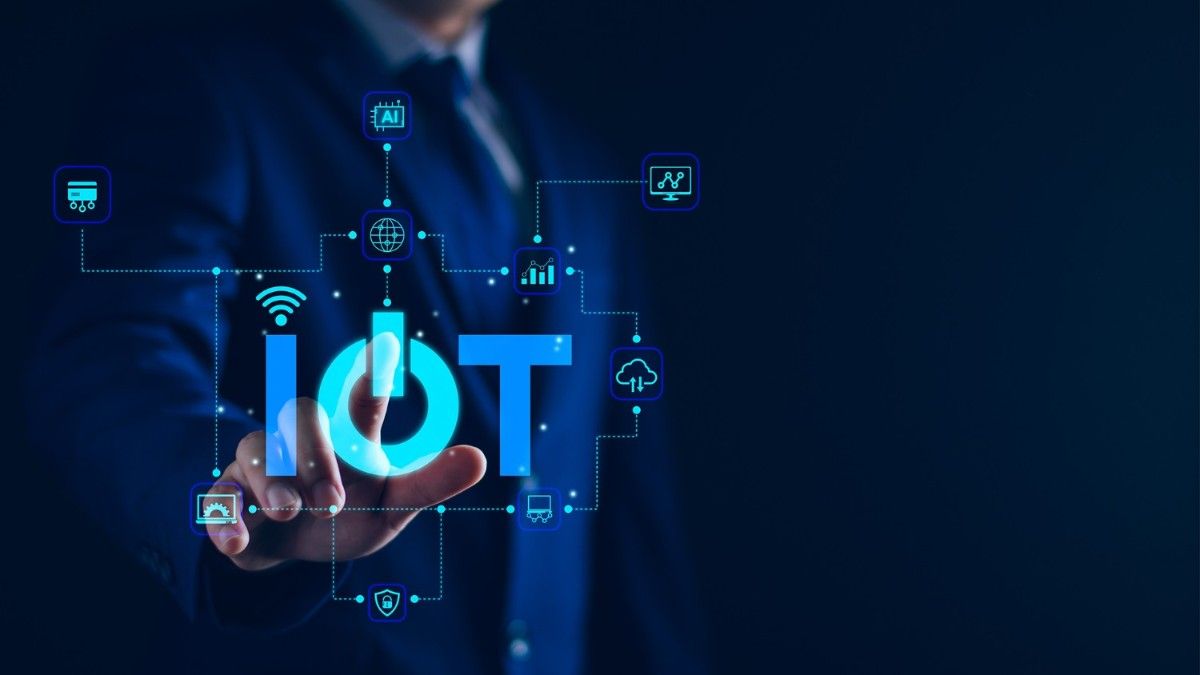
AI in IoT powering smart devices to become self-learning systems that analyze data and anticipate human needs.

IoT Meets AI: How Smart Devices Are Evolving Into Self-Learning Systems That Anticipate Human Needs

Ashish Singh by Ashish Singh
August 19, 2025
Share on FacebookShare on Twitter

The integration of Artificial Intelligence (AI) and the Internet of Things (IoT) is transforming how Americans interact with smart devices. What once required manual input is now handled by systems that connect, learn, and adapt to human behavior. IoT links appliances, cars, and wearables to the internet, while AI analyzes data and predicts user needs. Together, they form a new generation of self-learning systems that operate with minimal human involvement.

This change can be observed on a daily basis, which can be seen in thermostats that auto adjust to health trackers that send advance warnings. In America, nothing beats demand of convenience, safety and efficiency adoptions at home, industry and even in the urban environment. According to experts, this sort of integration is not only about smarter devices but ecosystems that think and behave in a humanlike manner. These emerging systems are predictors, forecasters, and preemptors of needs, in advance of user request, the determinant of the future of technology.

Understanding AI in IoT

AI in IoT is the use of artificial intelligence to augment the behaviour of connected devices. Whereas IoT interconnects machines to share information, AI utilizes that information in the form of actionable insights. The outcome is a system in which smart devices do more than talk to each other; they learn, adjust, and make autonomous choices. This transformation is changing IoT into actual intelligence.

In the case of U.S. households, the personalization could come in the form of smart speakers picking up the particular voice or thermostats learning the seasons. AI-driven IoT in industries uses machinery, being an example of where IoT is used to monitor the equipment and forecast the maintenance requirement prior to failure can be seen in the sectors. According to analysts, the marriage is a turning point as the gadgets will no longer rely on mere instructions to operate and begin to develop into self-learning systems. The fact is not only automation but adapting to humanitys habits.

Smart devices connected through AI and IoT analyzing real-time data for smarter decision-making.

Read also: Google Unveils Gemma: Pint-Sized OpenAI Model for Lightweight AI Tasks — What Developers Need to Know in 2025

The Intersection Between AI and IoT

The intersection of AI and IoT occurs when devices analyze and act on the vast data streams they collect. IoT provides connectivity, while AI supplies intelligence. Together, they transform raw information into meaningful actions. Instead of waiting for human direction, these systems anticipate what comes next.

Experts explained that this integration powers multiple U.S. applications, from healthcare monitoring to intelligent transportation. A connected car, for example, gathers driving data through IoT and uses AI to suggest safer routes. In agriculture, sensors monitor soil conditions, while AI predicts the best time to plant. These intersections create ecosystems where technology actively supports human needs.

Benefits of AI in IoT

The benefits of combining AI with IoT extend across industries and daily life. One of the most significant is advanced data analysis. IoT devices generate massive amounts of information, and AI identifies patterns too complex for humans. Farmers in the U.S., for instance, can now receive precise recommendations on irrigation schedules based on real-time sensor data.

The next advantage is automation. Industrial machines and logistics systems are becoming automatic and are no longer controlled by a human. In the U.S. manufacturing this automation helps decrease the error, cut expenses and raise productivity. The convergence of the capabilities of IoT connected solutions and the intelligence offered by AI enable business and individuals to achieve efficiency in ways that were previously unimaginable.

How Smart Devices Become Self-Learning

Self-learning systems are based on machine learning algorithms embedded in IoT software. They learn user behavior, examine data and learning over time. Information gathered for more extended periods, the more adept it is at knowing what is wanted. This leads to self-modifying cycles where technology is continually evolving.

At the U.S. household level, this is visible in equipment such as smart refrigerators that monitor food intake and provide grocery lists. Fitness trackers that can be worn also acquire information through daily routines to give more personal health advice. Analysts observed that these self-learning functionalities will transform reactive devices into active accomplices in our daily lives. The machines no longer react; they guess.

AI-powered smart devices learning user habits to anticipate and adapt to daily needs.

Read also: Meta’s DINOv3 Arrives: 1M-Scale Self-Supervised Vision Model with Gram Anchoring & 4K Dense Features

Use Cases Across U.S. Industries

Several industries in the U.S. demonstrate how AI-driven IoT is evolving into self-learning systems. In healthcare, wearable devices monitor vital signs and notify doctors before emergencies occur. In manufacturing, predictive maintenance systems prevent costly breakdowns by identifying issues early. These applications save time, money, and even lives.

The potential of this transformation is also revealed in Smart cities. Traffic sensors connected to IoT gather data, and to control traffic in real-time, AI goes through the analysis. Parking garages guide users to free parking places whereas utilities maximize the energy supply. City investments in the mentioned systems are creating smart cities learning habits of its residents and enhancing the quality of life.

Security and Scalability Challenges

As AI and IoT merge, security remains a top concern. Connected devices often serve as entry points for cyberattacks. AI strengthens defenses by detecting unusual activity and blocking threats in real time. Security experts in the U.S. report that AI-based monitoring is now critical for protecting both homes and industries.

Another problem is encountered once networks grow, and this is referred to as scalability. As millions of devices connect to IoT systems, it takes more than human intelligence to run every device. AI coordinates the work of devices: it ensures that devices do not conflict. Scalability can be used to develop smart cities, industrial networks, and home ecosystems in the United States.

The Future of Self-Learning Systems

The next horizon of AI within the IoT is systems that factor in human needs with minimal or no input. Smart devices are becoming assistants that acquire knowledge over time and can evolve. According to analysts, this change will transform the American people’s interaction with technology. Proactive systems will impact all sectors, including energy management and healthcare.

The appearance of self-learning Internet-of-things devices in the U.S. can be viewed as the shift towards intelligent ecosystems. Cities, houses, and businesses will become living systems reacting to human action. Such ecosystems will not only conserve resources but also enhance safety, comfort, and better health. This process of evolution of IoT and AI guarantees that tomorrow, technology will be both more intelligent and more human.

AI-driven self-learning systems predicting human needs and powering the future of smart technology.

Read also: Gemini Deep Research Gains API Access in 2025 — U.S. Developers Get Programmatic Access to Research Agent

FAQs

What does AI in IoT mean?

AI in IoT refers to the use of artificial intelligence in connected devices. IoT allows devices like sensors, wearables, and appliances to share data. AI processes that data to make decisions, predict user needs, and automate actions. Together, they create systems that are more intelligent and responsive.

How are smart devices becoming self-learning?

Smart devices use machine learning algorithms that analyze patterns in user behavior. Over time, they adapt and improve without needing constant input. Examples include thermostats that adjust based on daily schedules and wearables that offer personalized health advice. These devices evolve through continuous data analysis.

What industries in the U.S. benefit most from AI and IoT integration?

Industries such as healthcare, manufacturing, agriculture, logistics, and urban infrastructure gain the most. Hospitals use wearable IoT devices with AI for real-time monitoring, while factories rely on predictive maintenance to avoid costly downtime. U.S. cities also apply AI and IoT in traffic management, energy distribution, and public safety.

What challenges exist in combining AI and IoT?

The two main challenges are security and scalability. IoT devices can be vulnerable to cyberattacks, but AI strengthens defenses by detecting unusual patterns. Scalability is another concern as millions of devices connect, requiring AI to manage and coordinate networks efficiently.

What is the future of AI-powered IoT systems?

Analysts predict that AI-powered IoT will evolve into ecosystems that anticipate human needs with minimal input. Homes, businesses, and cities in the U.S. will rely on self-learning systems that adapt dynamically. This future promises improved efficiency, personalization, safety, and sustainability.
Tags: AI developmentAI in EducationOn-Device AIOpenAI Education Tools
Ashish Singh

Ashish Singh

Ashish — Senior Writer & Industrial Domain Expert Ashish is a seasoned professional with over 7 years of industrial experience combined with a strong passion for writing. He specializes in creating high-quality, detailed content covering industrial technologies, process automation, and emerging tech trends. Ashish’s unique blend of industry knowledge and professional writing skills ensures that readers receive insightful and practical information backed by real-world expertise. Highlights: 7+ years of industrial domain experience Expert in technology and industrial process content Skilled in SEO-driven, professional writing Leads editorial quality and content accuracy at The Mainland Moment

Next Post
Stock market dashboard showing trending AI penny stocks under $10.

Hidden AI Penny Stocks Under $10: The Next Big Winners in Artificial Intelligence Investing

Leave a Reply Cancel reply

Your email address will not be published. Required fields are marked *

Recommended.

Top ChatGPT Alternatives to Power Your AI Productivity Workflows

Top ChatGPT Alternatives to Power Your AI Productivity Workflows

July 6, 2025
AI voice assistant helping elderly individuals in US homes with daily tasks and companionship.

Companionship & Care: How AI Voice Assistants are Revolutionizing Elderly Support in US Homes

July 14, 2025

Trending.

AI text remover tool in WPS Photos seamlessly removing text from an image background

Recraft AI Magic: Can You Really Remove Text from Images Seamlessly? (Step-by-Step Tutorial)

August 1, 2025
A futuristic AI interface with glowing code and the Claude Opus logo.

Anthropic Expands Claude AI Capabilities with File Creation and Editing Across Excel, Word, PowerPoint, and PDF Formats

September 10, 2025
Global experts, investors, and startups gather at the AI Innovators Summit 2026 California in San Francisco to shape the future of AI.

AI Innovators Summit 2026 California: Where Next-Gen AI Tools Meet Venture Capital, Universities & Silicon Valley Disruption

September 9, 2025
Windows 11 Copilot+ PCs Add NPU-Powered Live Captions, Studio Effects and File Explorer AI Actions

Windows 11 Copilot+ PCs AI Features: Live Captions, Studio Effects & File Explorer Actions Explained

September 8, 2025
Google Translate app showcasing AI-powered practice and live translation features designed to rival Duolingo.

Google Translate Challenges Duolingo: Next-Gen AI Tools That Could Redefine Language Learning

August 27, 2025
VTECZ website logo – AI tools, automation, trends, and artificial intelligence insights

Welcome to Vtecz – Your Gateway to the World of Artificial Intelligence
At Vtecz, we bring you the latest updates, insights, and innovations from the ever-evolving world of Artificial Intelligence. Whether you’re a tech enthusiast, a developer, or just curious about AI.

  • AI Trends
  • AI Tools
  • How-To Guides
  • AI Tech
  • Business
  • Events
  • AI Trends
  • AI Tools
  • How-To Guides
  • AI Tech
  • Business
  • Events
  • About Us
  • Contact Us
  • Privacy & Policy
  • Disclaimer
  • Terms & Conditions
  • Advertise
  • Write for Us
  • Cookie Policy
  • Author Bio
  • Affiliate Disclosure
  • Editorial Policy
  • Sitemap
  • About Us
  • Contact Us
  • Privacy & Policy
  • Disclaimer
  • Terms & Conditions
  • Advertise
  • Write for Us
  • Cookie Policy
  • Author Bio
  • Affiliate Disclosure
  • Editorial Policy
  • Sitemap

Why Choose us?

  • Trending AI News
  • Breakthroughs in Machine Learning & Robotics
  • Cutting-edge AI Tools and Reviews
  • Deep Dives into Emerging AI Technologies

Stay ahead with daily blogs that simplify complex topics, analyze industry trends, and showcase how AI is shaping the future.
Vtecz is more than a blog—it’s your daily AI companion.

Copyright © 2026 VTECZ | Powered by VTECZ
VTECZ website logo – AI tools, automation, trends, and artificial intelligence insights
Icon-facebook Instagram X-twitter Icon-linkedin Threads Youtube Whatsapp
No Result
View All Result
  • AI Trends
  • AI Tools
  • How-To Guides
  • AI Tech
  • Business
  • Events

© 2025 Vtecz. All rights reserved.

Newsletter

Subscribe to our weekly newsletter below and never miss the latest news an exclusive offer.

Enter your email address

Thanks, I’m not interested

Seraphinite AcceleratorOptimized by Seraphinite Accelerator
Turns on site high speed to be attractive for people and search engines.